Deshima Sessions · Curated Remote Production

Deshima Sessions

Remote collaboration with a clear creative center.

```

Deshima Sessions is the curated production network behind the music. It brings selected musicians, producers, vocalists, songwriters, engineers and creative partners together for projects that need more than files: direction, taste, structure and documentation.

It is not an open upload platform. It is not a random marketplace. It is a guided production environment where the right people are connected around the right idea.

ModelCurated remote production
FocusMusic, people, direction
OutputUsable, documented, licensing-ready music
```
What It Is

Not a platform. A production network.

Deshima Sessions exists for projects that need human collaboration, professional decision-making and a clear creative path from idea to finished recording.

What it is

A curated network of musicians, producers, vocalists, songwriters, engineers and creative partners who can work remotely on selected music projects.

```

What it is not

It is not a public upload service, not a beat marketplace, not a stock music dump and not a place where random files are simply collected without direction.

```
  • Projects are shaped around a specific idea, sound or use case.
  • Creative partners are selected because they fit the project.
  • Remote work is possible, but the process remains guided.
  • The goal is finished music with identity, structure and value.
The Principle

Decentralized work. Central direction.

The people involved do not have to be in the same room. But the project still needs one clear artistic direction.

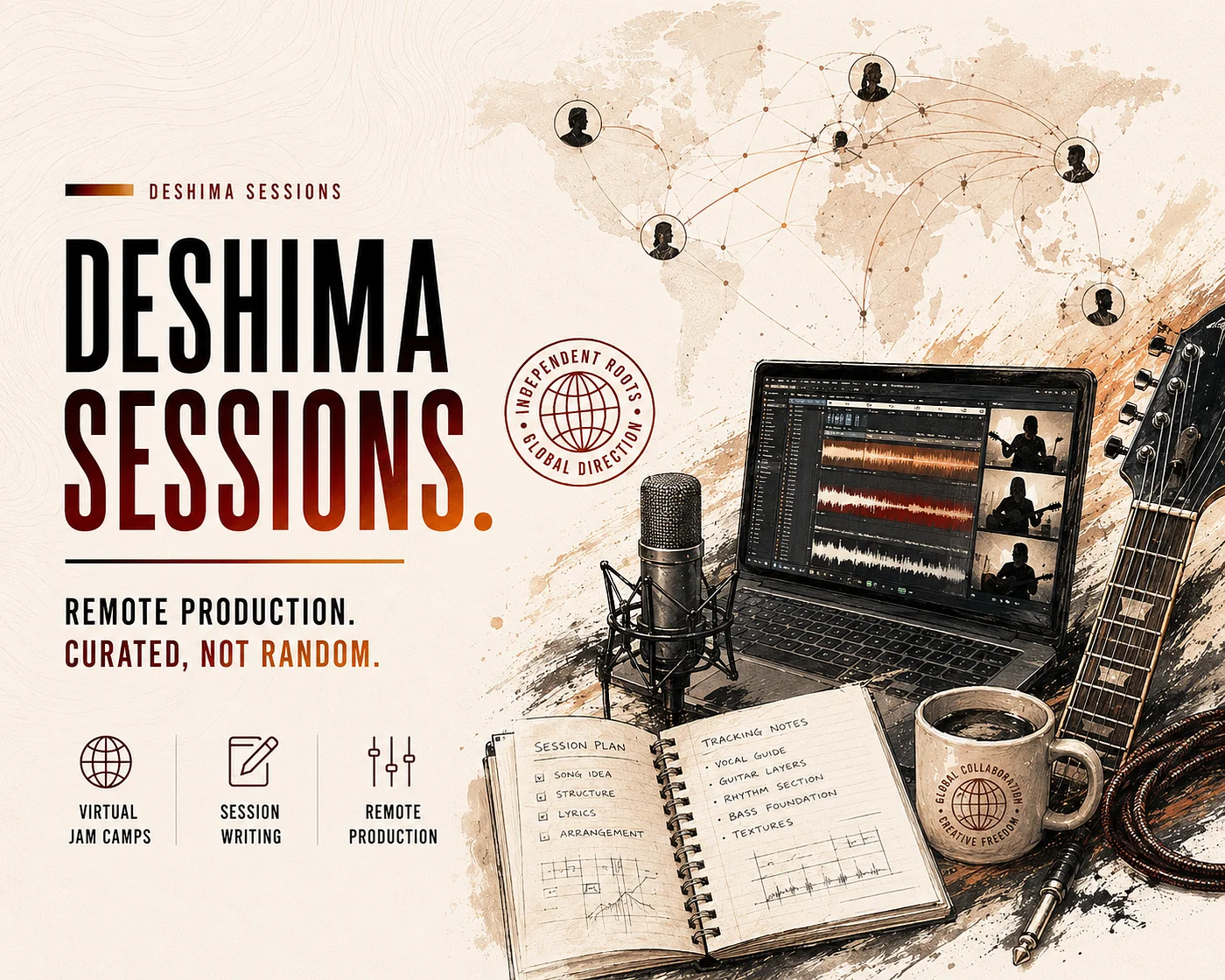
Deshima Sessions uses the freedom of remote collaboration without turning the creative process into chaos. A guitarist can record in one city, a vocalist in another country, a producer can arrange the track remotely, and the mix can be finalized somewhere else.

But the song is not left to chance. The creative direction defines the sound, the mood, the purpose, the quality level and the final decision-making.

Remote Curated Human Documented Direction-led
Workflow

From idea to finished track.

Every project can be different, but the production logic follows a clear path: concept, people, performance, review, finalization and documentation.

01 · Concept

The project starts with a clear idea.

Before musicians are involved, the project needs a direction. This can include genre, mood, reference sound, lyrical idea, intended use, target audience, release context or licensing potential.

```
02 · Casting

The right people are selected.

Deshima Sessions connects people based on fit. A project may need a specific vocalist, a real drummer, a guitar player with the right feel, a producer with genre experience, or an engineer who understands the intended sound.

03 · Production Brief

Everyone works from the same direction.

A clear brief helps avoid confusion. It can define tempo, key, structure, references, lyrical direction, technical requirements, file formats, deadlines and the expected role of each contributor.

04 · Remote Recording

Performances are created across distance.

Musicians and vocalists record from their own studios or trusted production environments. Modern tools make collaboration fast, but the focus remains on real performance, feel and musical intention.

05 · Review and Direction

The material is shaped into one vision.

Recordings are reviewed, selected, edited and arranged. Feedback is not random. It follows the creative goal of the project. The question is always: does this serve the song?

06 · Finalization

The song becomes usable and presentable.

The final stage can include editing, mixing, mastering, alternate versions, stems, metadata, credits and rights-related documentation. The result should be more than a finished audio file. It should be a structured music asset.

```
Who Is Involved

The right talent for the right song.

Deshima Sessions works like a creative network, not like a fixed band. The team can change depending on what the project needs.

  • Vocalists for lead vocals, hooks, backing vocals and character.
  • Musicians for guitars, bass, drums, keys, percussion and real performance.
  • Songwriters for lyrics, toplines, melodies and structure.
  • Producers for arrangement, sound, feel and production identity.
  • Engineers for recording quality, editing, mixing and mastering.
  • Creative partners for artwork, visual identity, release context and campaign ideas.

The network is flexible. The quality standard is not.

Deshima Sessions Principle
Rights and Credits

Creativity needs clean structure.

Remote collaboration only works professionally when contributions, credits and rights are taken seriously from the beginning.

Deshima Sessions is built around the idea that creative work should be documented properly. A song can involve writers, performers, producers, session musicians, engineers, artwork, stems, masters and different possible uses.

Who wrote the song?
Who performed on it?
Who produced the recording?
Who controls the master?
How can it be licensed?

Depending on the project, documentation can include credits, contributor roles, recording information, split information, usage terms, master-related notes, publishing-related notes, licensing preparation and metadata.

This is not about making the process cold or bureaucratic. It is about respecting the people behind the music and making sure the finished work can be released, represented, licensed or collected without unnecessary confusion.

Licensing Preparation

Built for music that can be used.

Modern music often needs to work beyond one release. It may be used in videos, campaigns, games, podcasts, communities, Web3 projects or branded formats.

  • Tracks can be prepared with clear credits and contributor information.
  • Instrumental versions can support media and sync use.
  • Stems can make future edits and custom versions easier.
  • Alternate edits can fit shorter digital formats.
  • Metadata can help keep information connected to the recording.
  • Rights awareness can make licensing conversations cleaner.

A licensing-ready mindset does not mean that every song is automatically available for every use. It means that the production is built with professional usability in mind.

What Can Be Created

More than one final file.

A modern production can become a small ecosystem of usable music assets.

01Artist releases and original tracks
02Instrumentals, stems and alternate edits
03Licensing-ready catalog material
  • full songs
  • instrumental versions
  • vocal versions
  • radio edits
  • short social edits
  • stems for remixing or media use
  • exclusive versions
  • collectible digital editions
Quality Control

Remote does not mean random.

Distance can make production more flexible. But flexibility only becomes valuable when there is quality control.

Deshima Sessions is designed to keep remote collaboration focused. The process can include reference tracks, production notes, file guidelines, revision rounds, arrangement decisions, performance selection and final approval steps.

Every part has to serve the song. Not the ego. Not the tool. Not the trend.

Creative Direction
  • The song decides what is needed.
  • The production follows the emotional goal.
  • The people are selected for fit, not for quantity.
  • The final result should feel intentional.
Who It Is For

For people who need more than a file.

Deshima Sessions is for projects where music needs identity, quality, direction and a professional framework.

For artists

Artists can work with selected musicians, producers and creative partners without being limited to their local scene or one physical studio.

```

For media partners

Media, brand and digital projects can benefit from music that is created with usability, documentation and licensing awareness in mind.

```
  • independent artists
  • music projects
  • labels and rights holders
  • film and video producers
  • brands and campaigns
  • game and media projects
  • Web3 communities
  • collectors and fan-driven projects
Deshima Sessions

The studio is no longer one room. It is a network.

```

Deshima Sessions brings people, performances and production decisions together across distance. The work can happen in different places, but the song remains the center.

  • Curated, not random.
  • Remote, but directed.
  • Flexible, but professional.
  • Modern, but human.

Deshima Sessions turns remote collaboration into a structured creative process — built for music that deserves identity, clarity and long-term value.

```